
(Self-)Portraits of a Habsburg Periphery in the High Modern Era
At the turn of the 19th to the 20th century, European societies were changing at a rapid pace, a process that affected the centres of nation states and multi-ethnic empires just as much as their peripheries – including the Crown Land of Bukovina, situated in the far east of Cisleithania. This ‘breakthrough into modernity’ was accompanied and driven by a medium that, following its introduction, quickly became the central means of communication of the time: the illustrated postcard. They were produced in their millions by large publishing houses and small traders, written on and sent by people from across a broad spectrum of society, but also collected – as a way of engaging with the wider world.
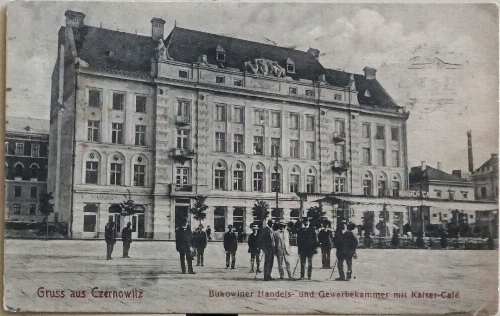
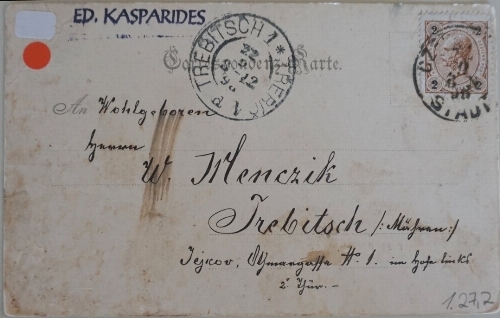
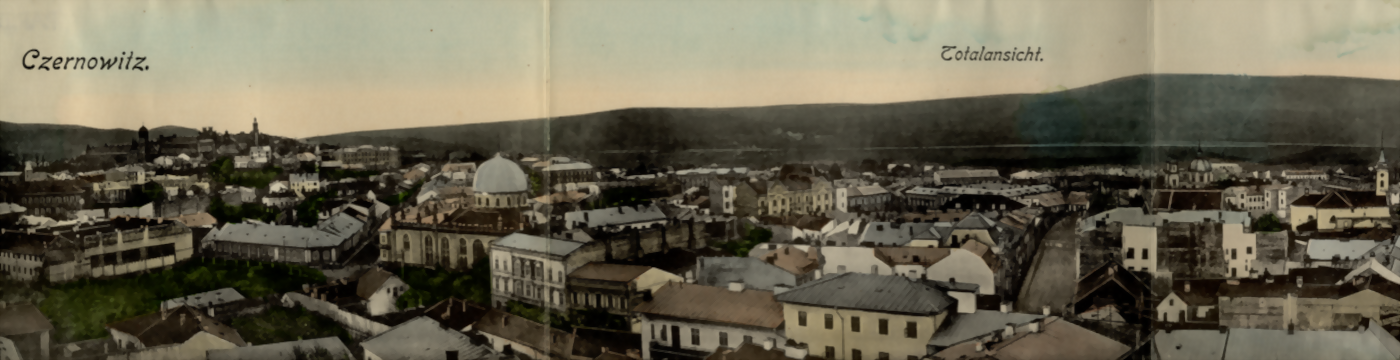
Maren Röger examines the views on postcards as a mass medium that took shape in Bukovina between 1895 and 1918, and how these were perceived. The focus is on the legal framework and the economic actors involved in postcard production, thereby bringing into focus a group – the predominantly small-scale traders in Bukovina – that is otherwise under-represented in economic history studies. She is also interested in the visual narratives and the ways in which the Crown Land was appropriated by the writers, including narratives of modernity and backwardness – the central contemporary discourse in the Habsburg periphery. A central aspect is the portrayal of multi-ethnicity, as Bukovina, unlike any other Habsburg Crown Land, was characterised by diverse ethnic groups, and the peak of postcard production and reception coincided with the peak of nationalism. Did the cards convey the ideologem of ‘Bukovinism’, or were there (commercially motivated) limits to the much-vaunted Bukovinian tolerance in the coexistence of ethnic groups and religions?
Funded by:





Bukowina-Institut
An der Universität Augsburg
86159 Augsburg
Opening hours
8:30-16:00 Uhr