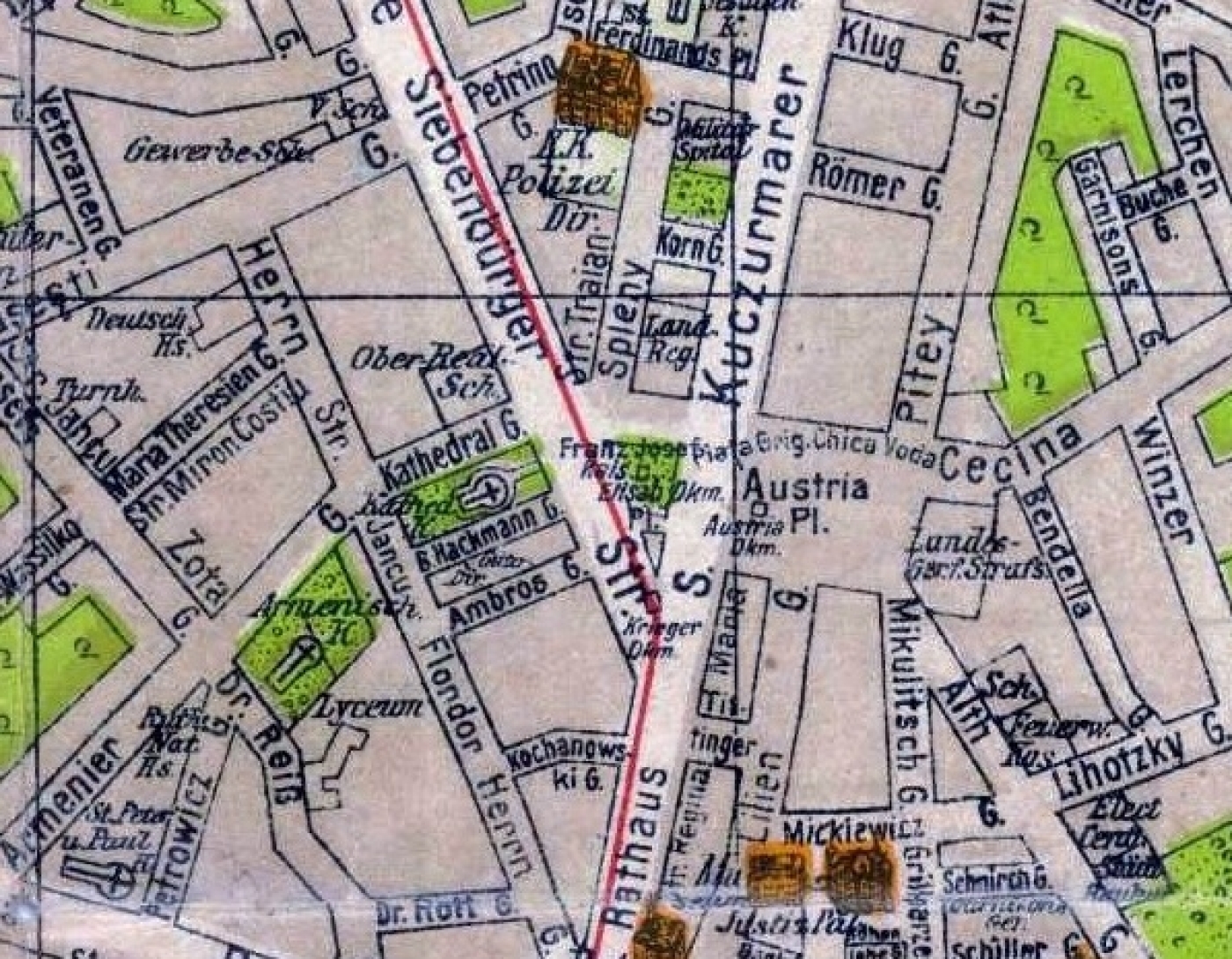
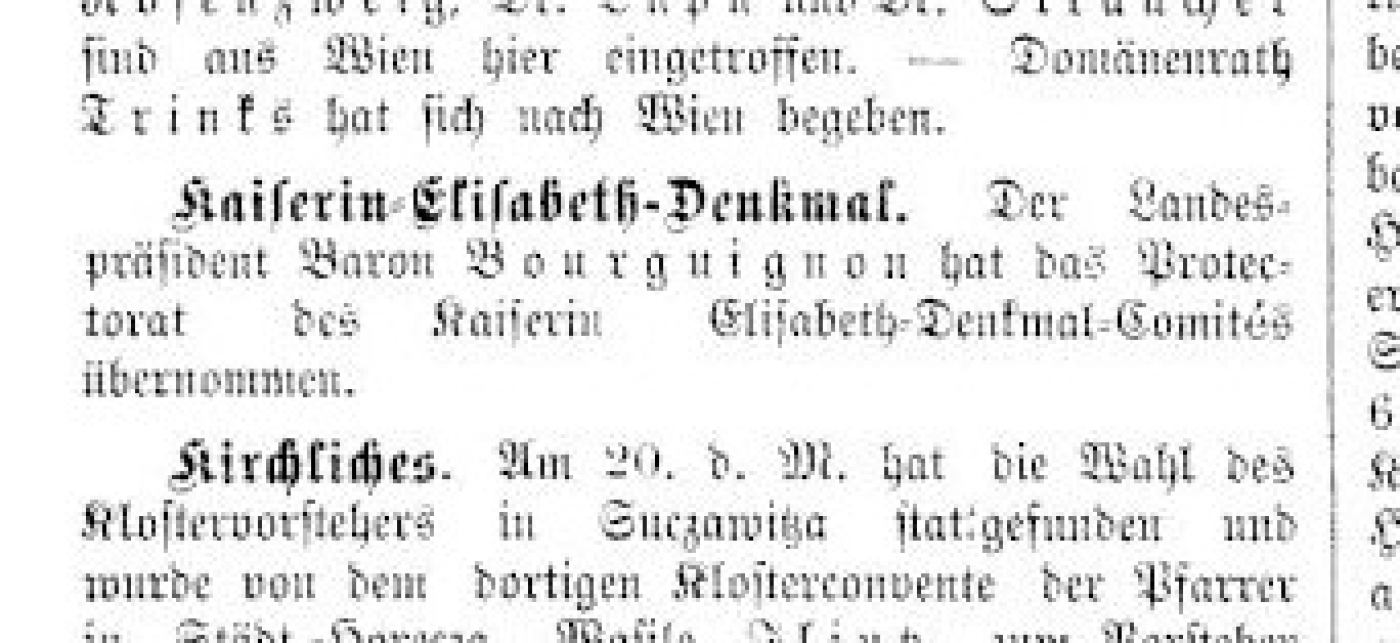
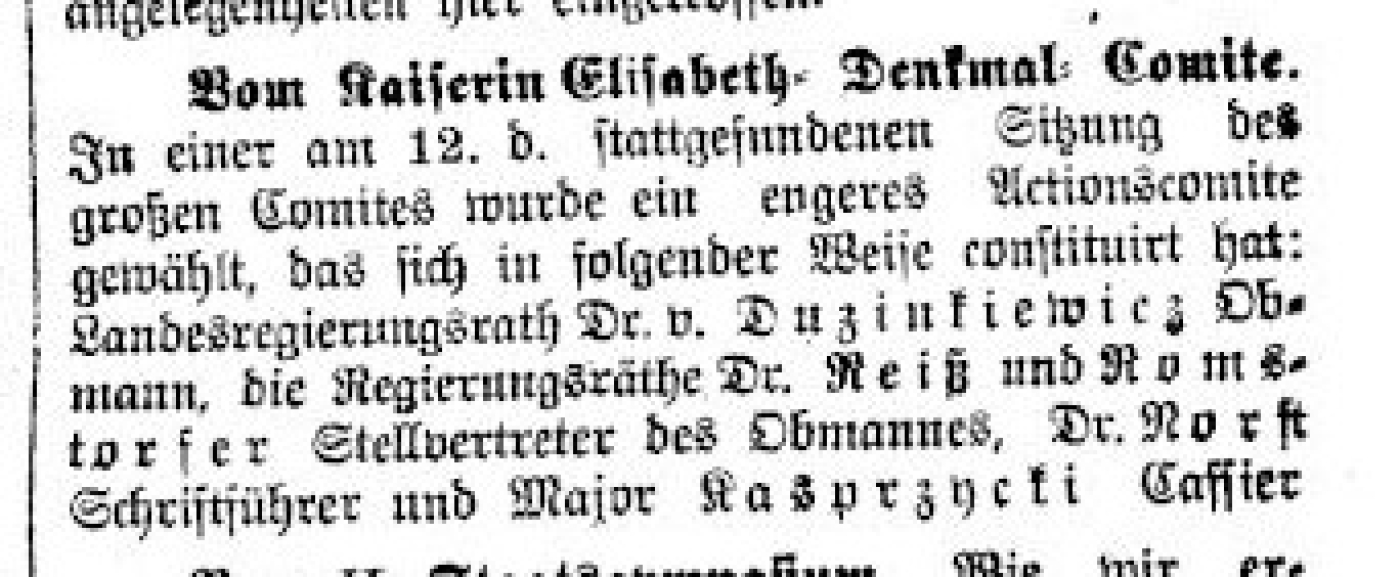
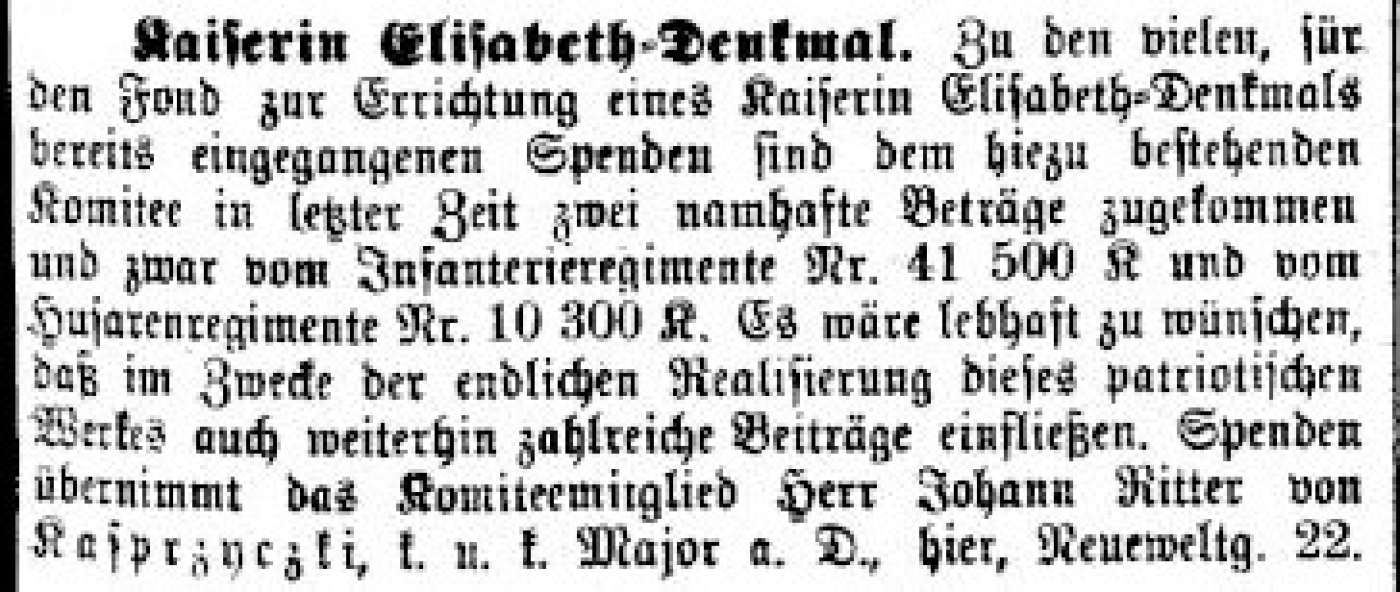
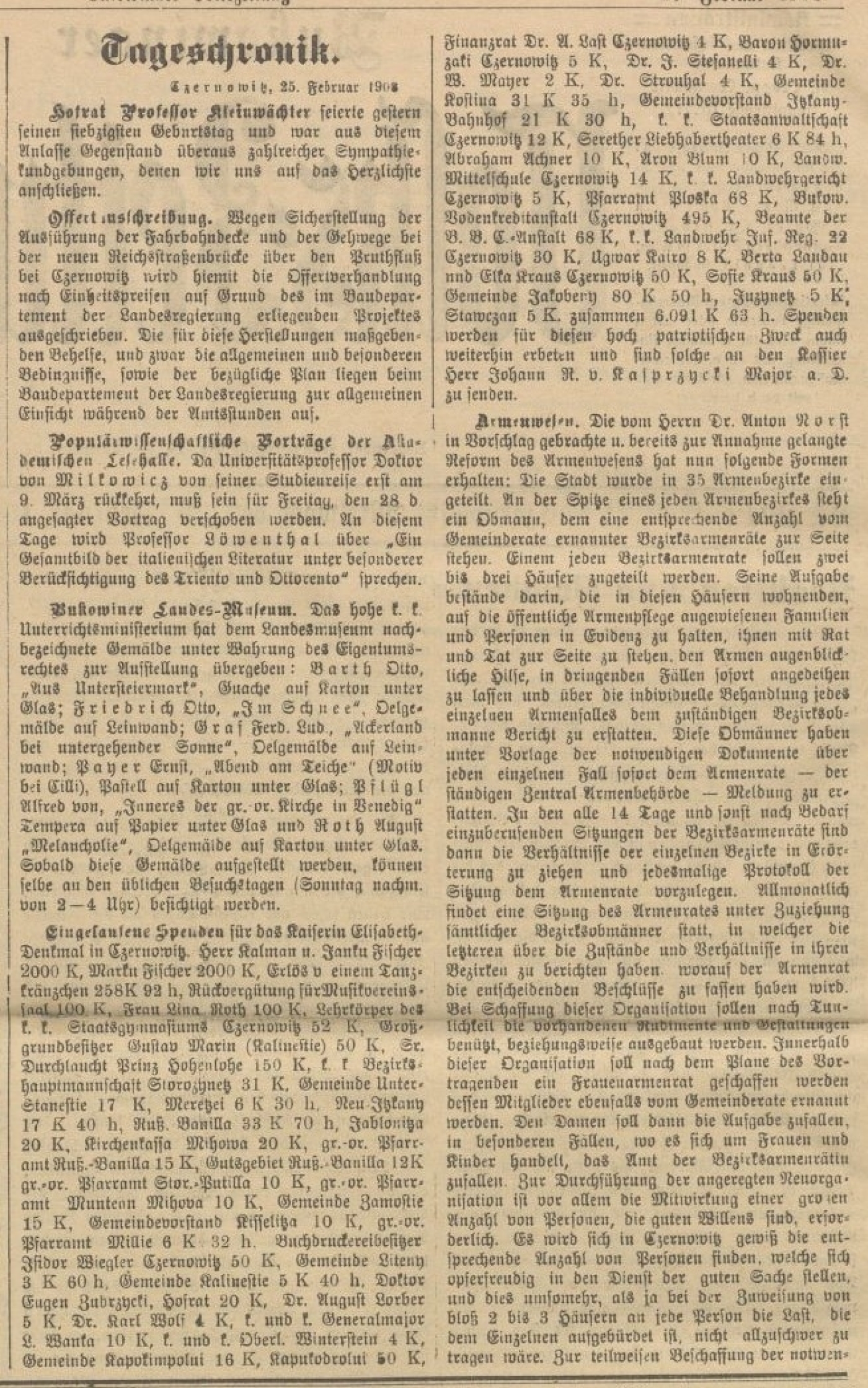
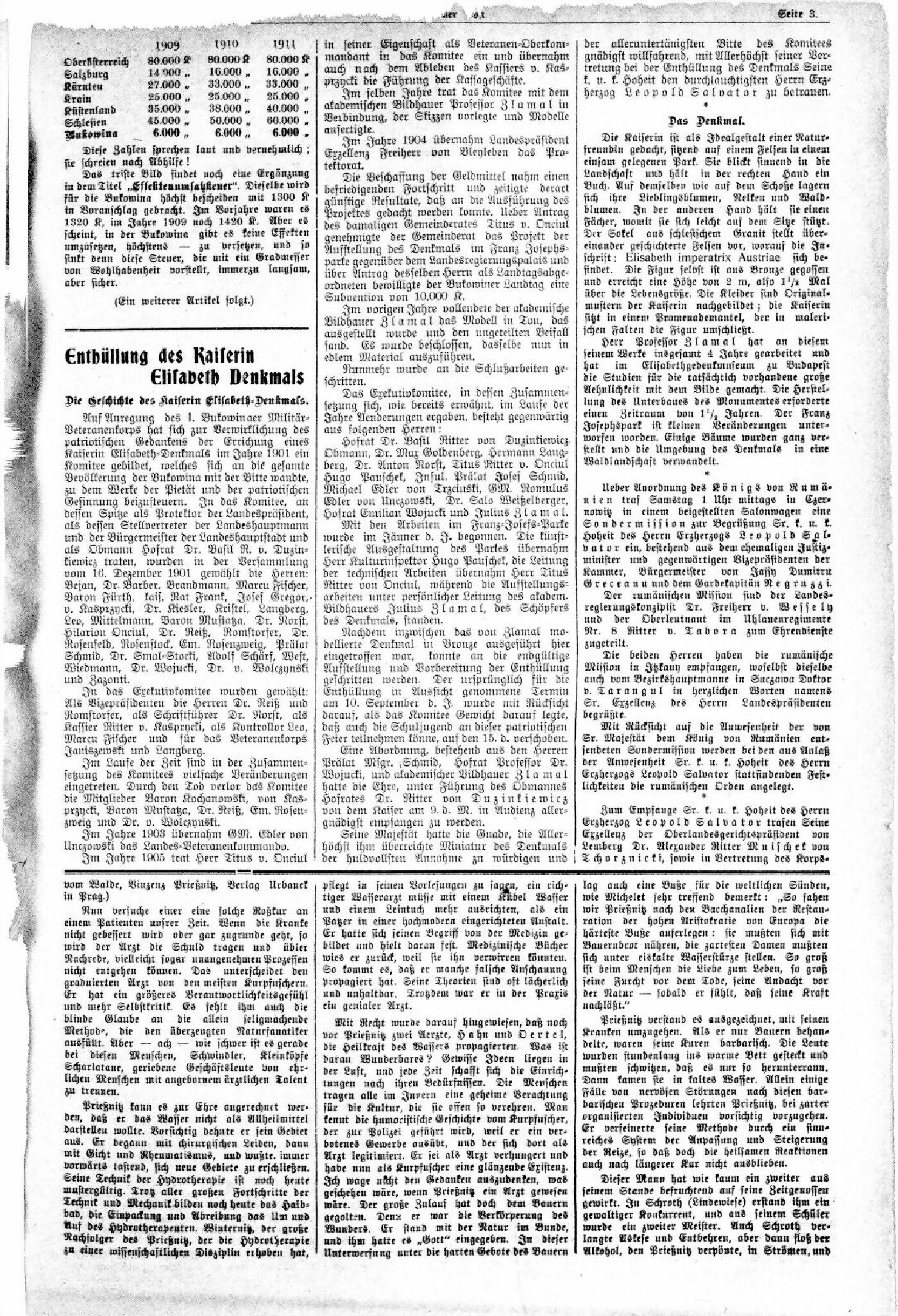
In 1901, at the suggestion of the Bukovina Military Veterans Corps, a committee for the construction of the memorial was formed, chaired by the provincial president, governor and mayor. Within a short time, almost 14,000 crowns had been raised for the monument, the total cost of which was estimated at up to 70,000 crowns. For a long time, Elisabeth Square (now Theatre Square) was favoured and even chosen as the site for the monument. In 1910, however, the city decided to erect the monument in Franz-Joseph-Park (opposite Austriaplatz).
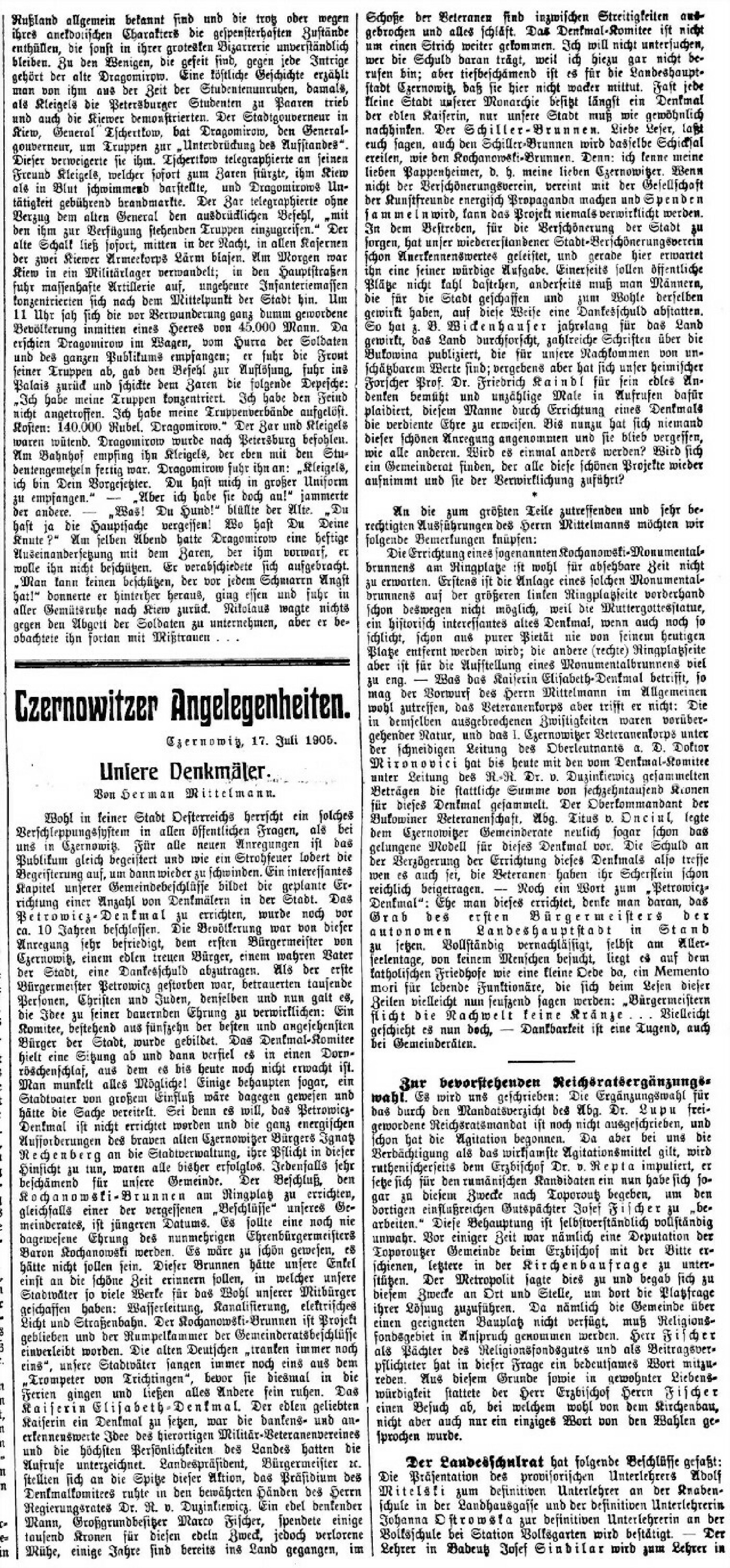
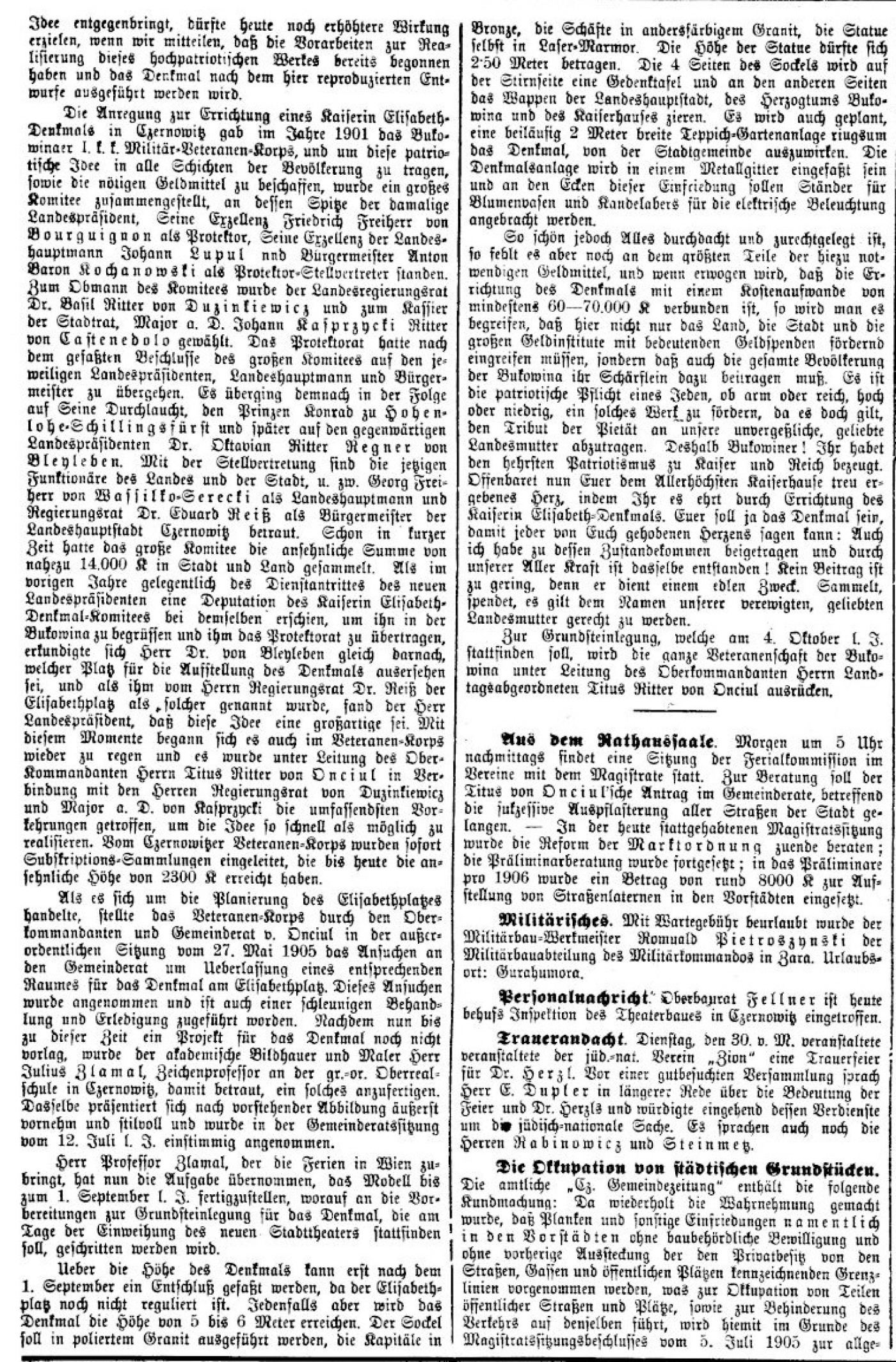
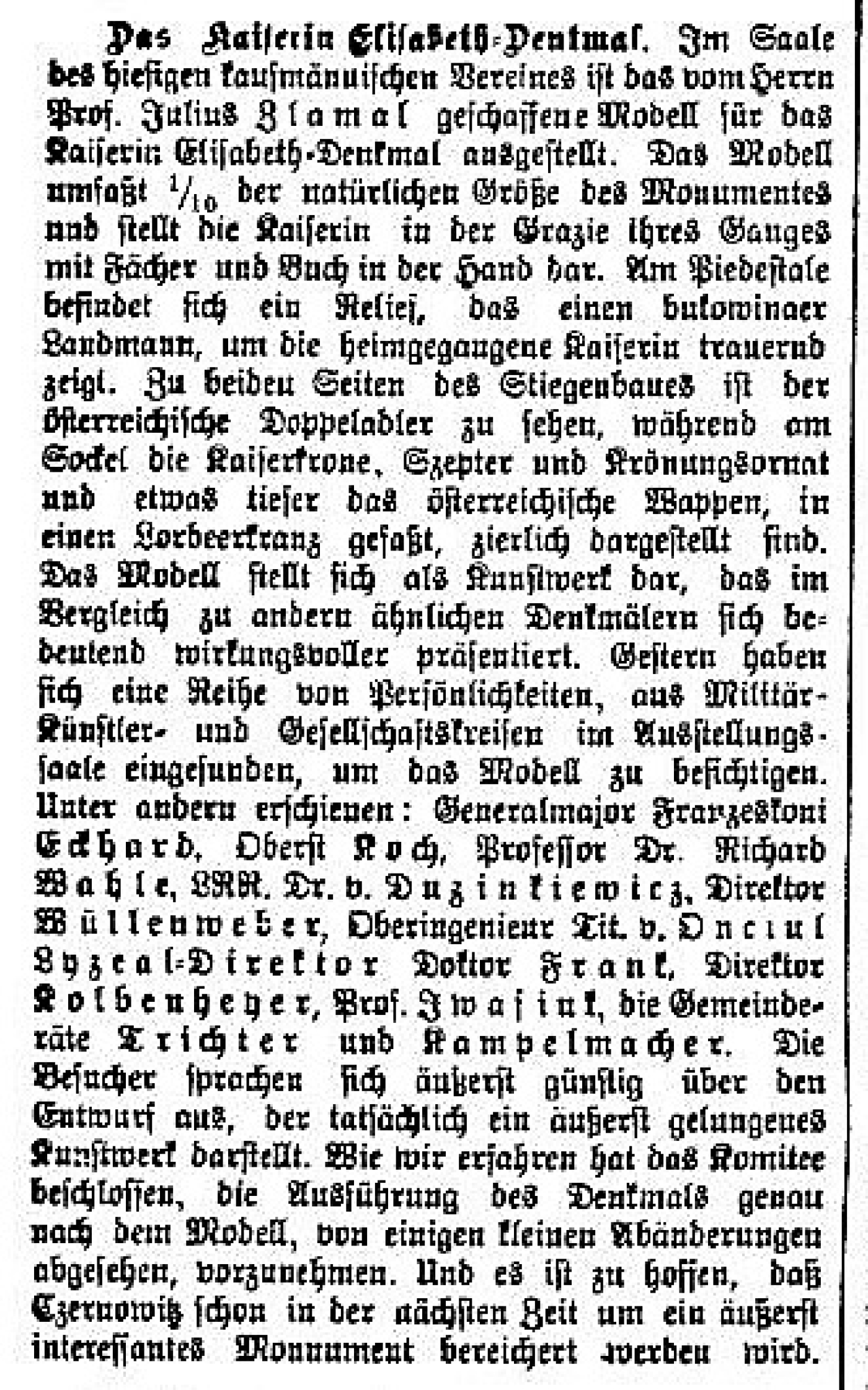
In 1905, the sculptor and painter Julius Zlamal of the Chernivtsi gymnasium was commissioned to create a model for the monument, which was unanimously approved by the municipal council on 12 July 1905 (Czernowitzer Allgemeine Zeitung, 3 August 1905, p. 4). According to this model, the monument, including the pedestal, was to be 5 to 6 metres high and the statue itself approximately 2.5 metres high. By this time the plans seemed to be well advanced: The design of the monument had been approved, the site had been chosen and the laying of the foundation stone had been scheduled for 4 October 1905. Only the funding had not yet been secured: 'However well thought out and organised everything was, the greater part of the necessary funds was still lacking' (ibid.). The entire population of Bukovina was therefore called upon to contribute to the financing: 'It is the patriotic duty of everyone, whether rich or poor, high or low, to support such a work, as it is a tribute of piety to our unforgettable, beloved mother of the land' (ibid.). After a year of stagnation, the local press again appealed for more donations 'in order to finally realise this patriotic work' (Czernowitzer Allgemeine Zeitung, 1 February 1906, p. 5).
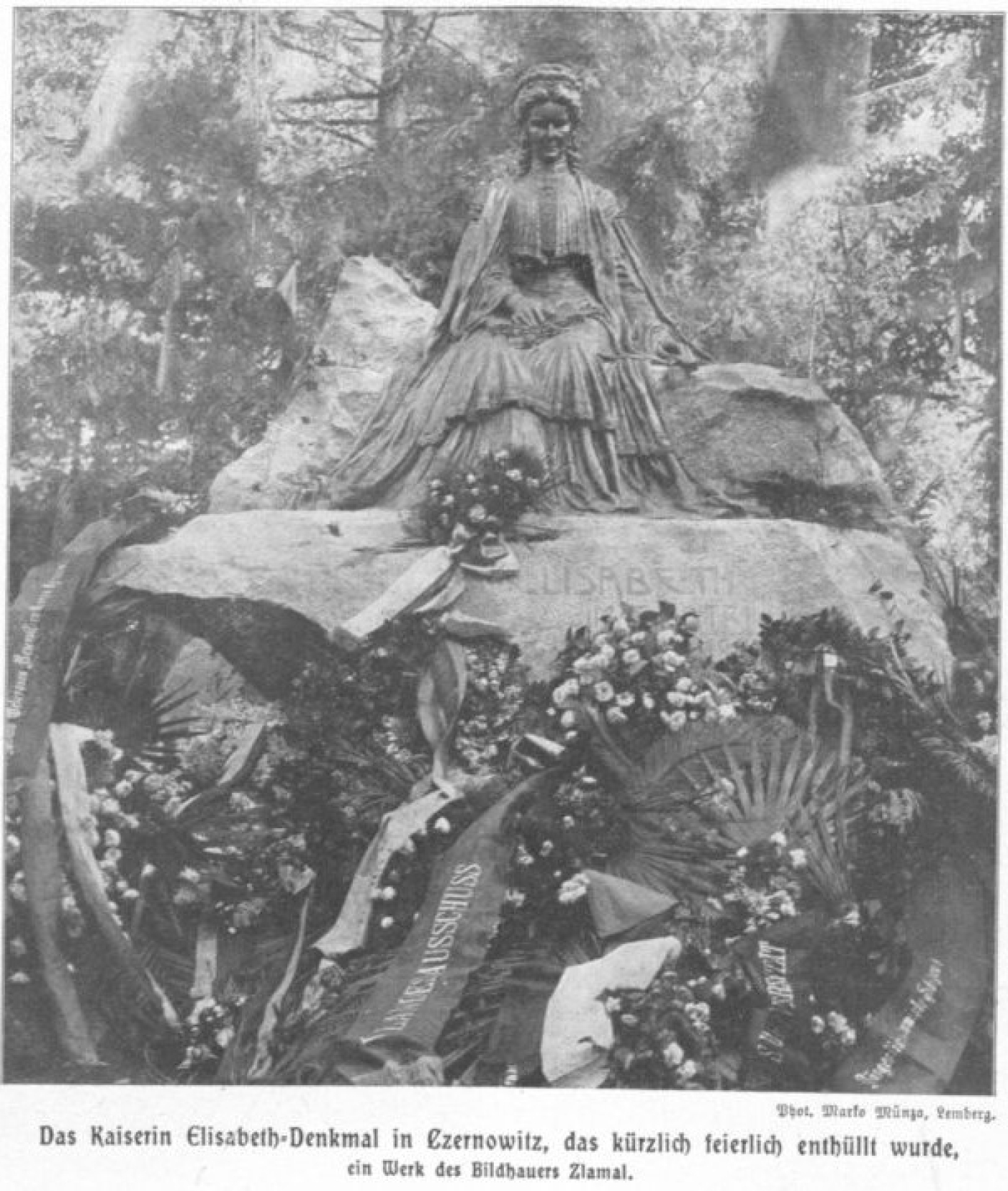
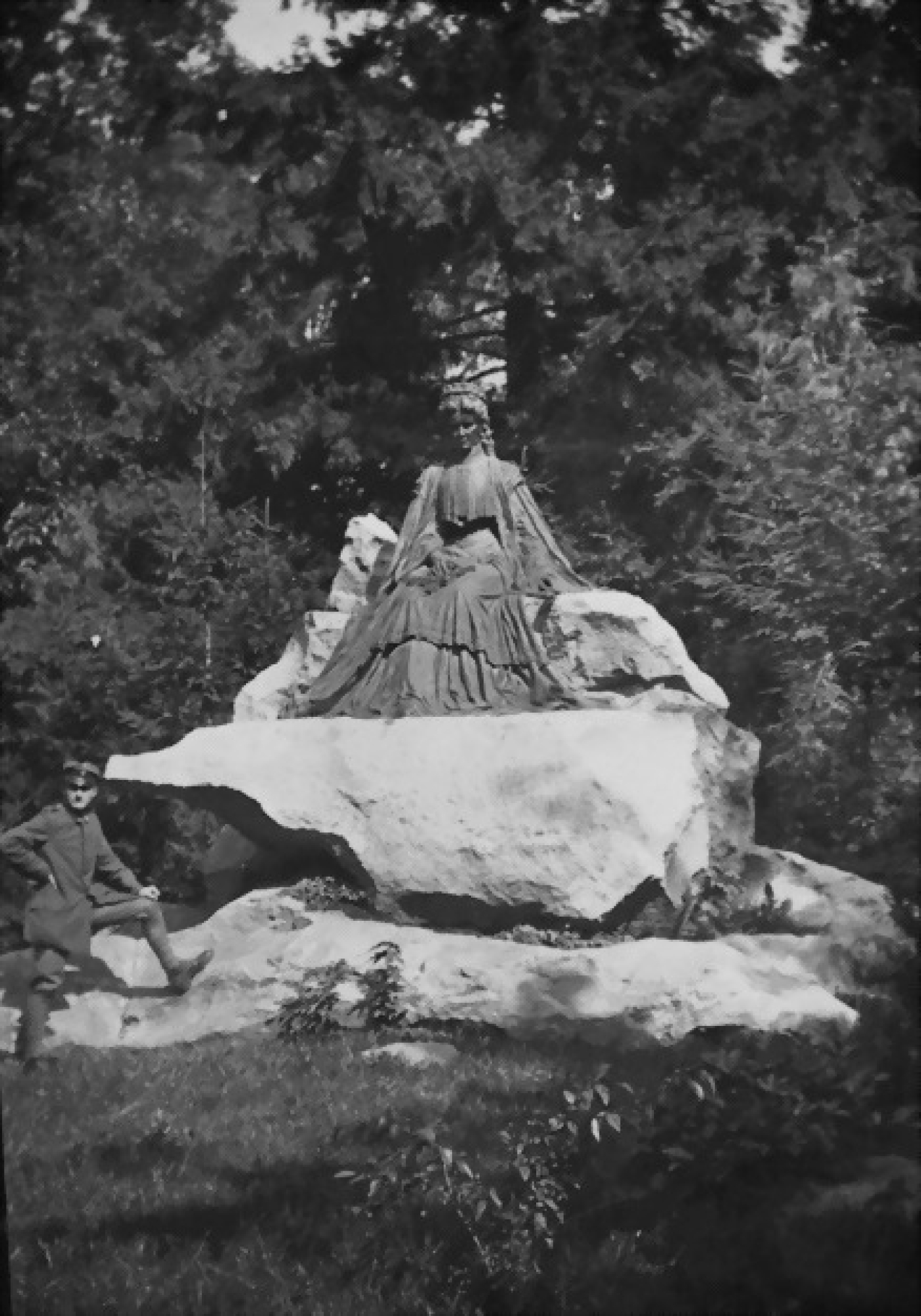
However, the plans for the monument changed radically. First, the model seems to have been revised again. The first model showed 'the Empress in the grace of her walk, with a fan and a book in her hand'. The monument erected later, however, shows Elisabeth seated on a rock. In 1907, the Monument Committee again approved Zlamal's design, but asked for 'a few minor changes' (Bukovinaer Rundschau, 10 February 1907, p. 4).
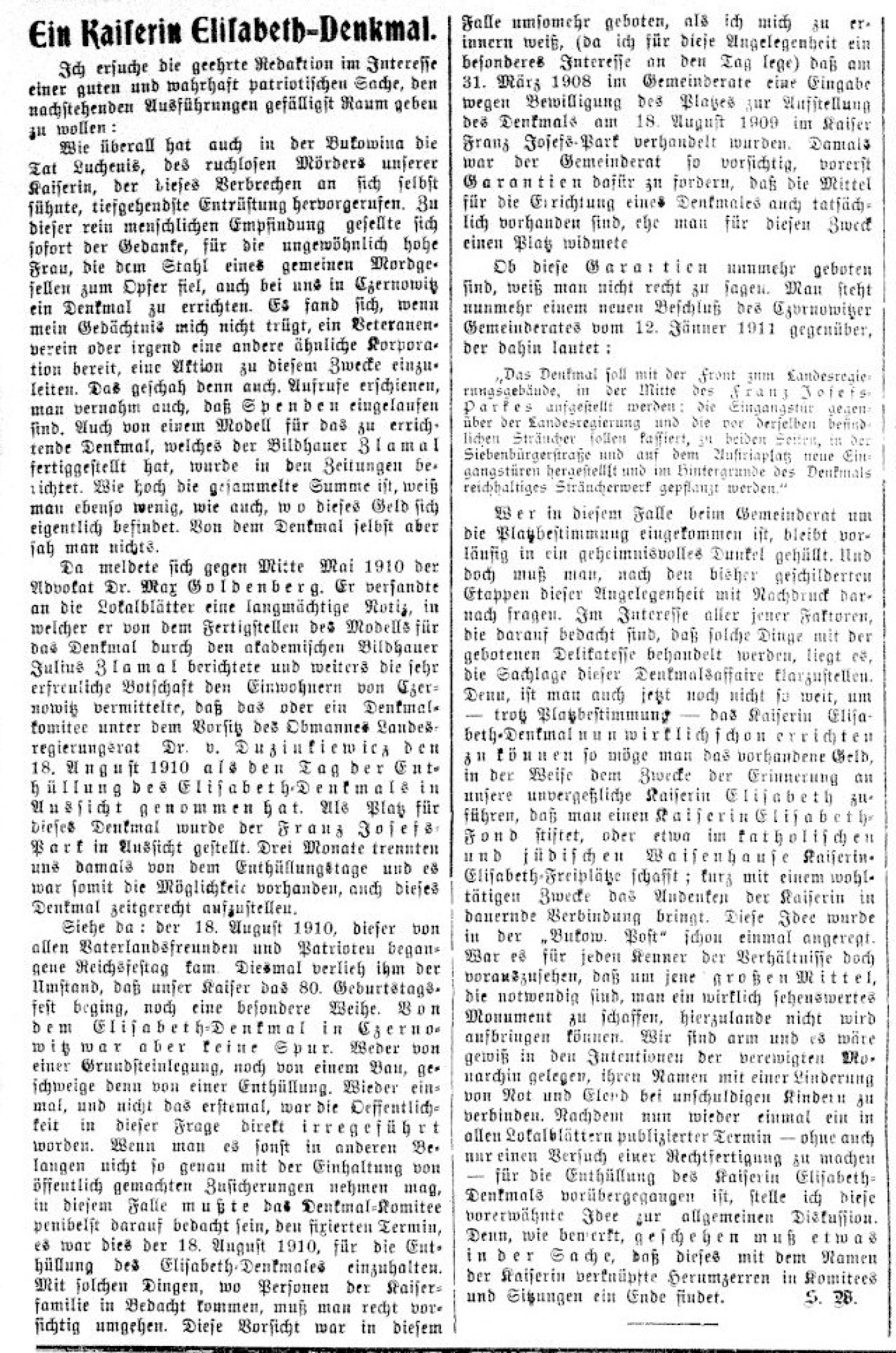
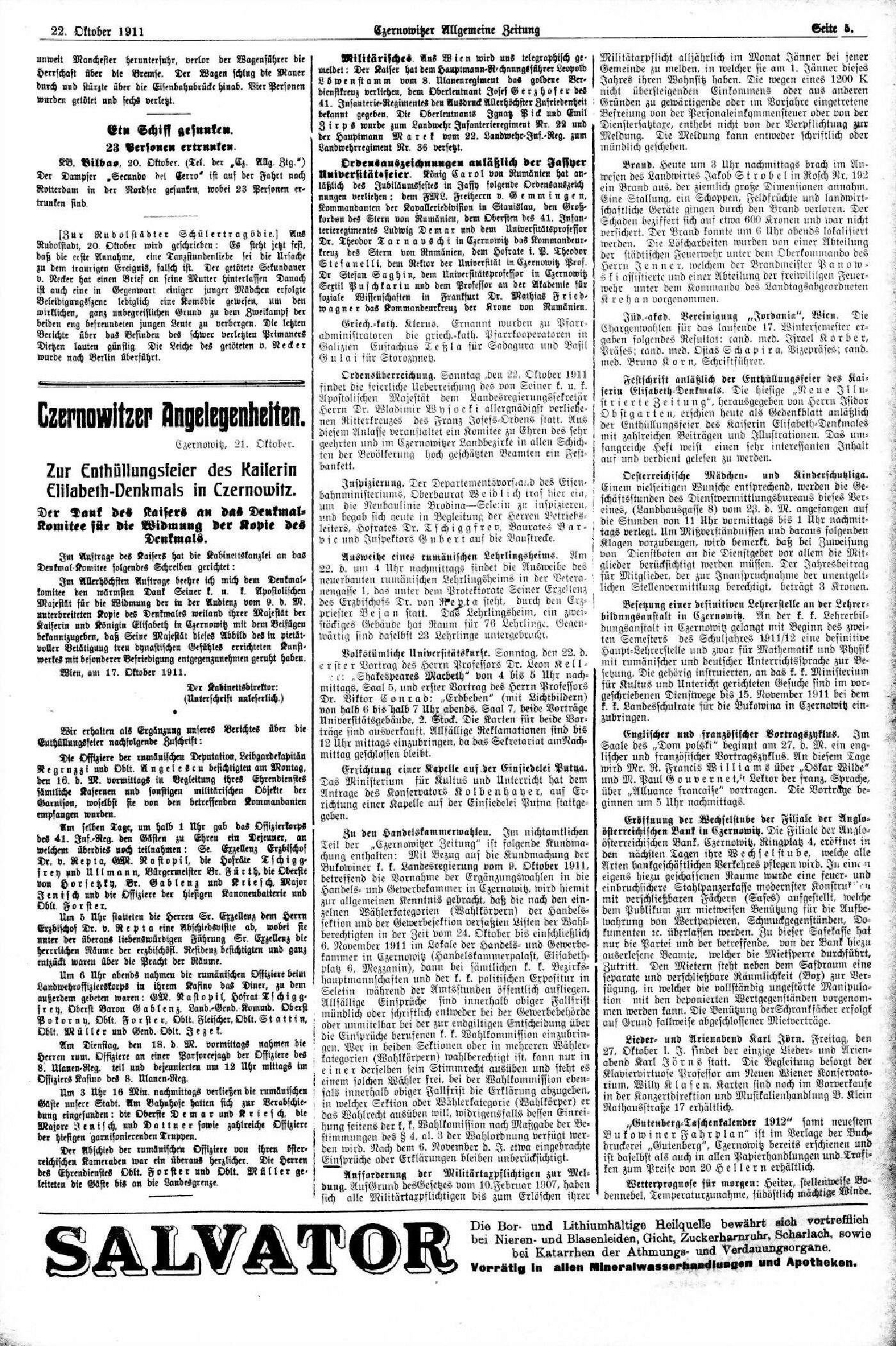
In May 1910, the committee decided to erect the monument in the Franz Joseph Park. However, the date set for its unveiling - 18 August 1910 - could not be kept. With a new decision of the City Council on 12 January 1911, the design plans were finalised. The plans for the design of the square and the surroundings of the monument took concrete shape with a new decision of the Municipal Council on 12 January 1911: "The monument is to be erected with the front facing the provincial government building in the middle of the Franz-Josefs-Park: The entrance door opposite the provincial government and the shrubs in front of it are to be removed, new entrance doors are to be built on both sides, in Siebenbürgerstraße and in Austriaplatz, and a rich planting of shrubs is to be planted in the background of the monument' (Bukowinaer Post, 22 January 1911, p. 3).
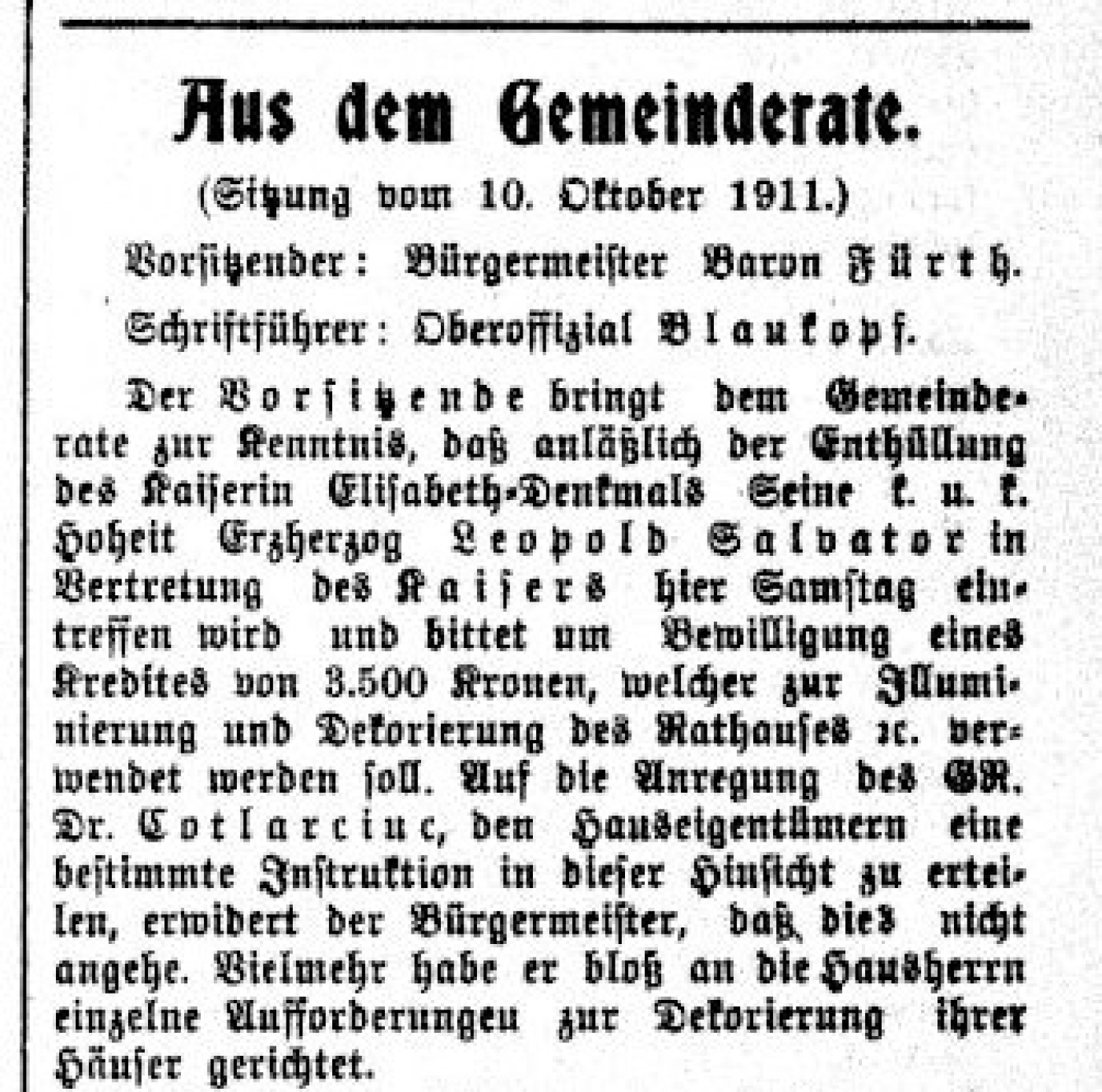
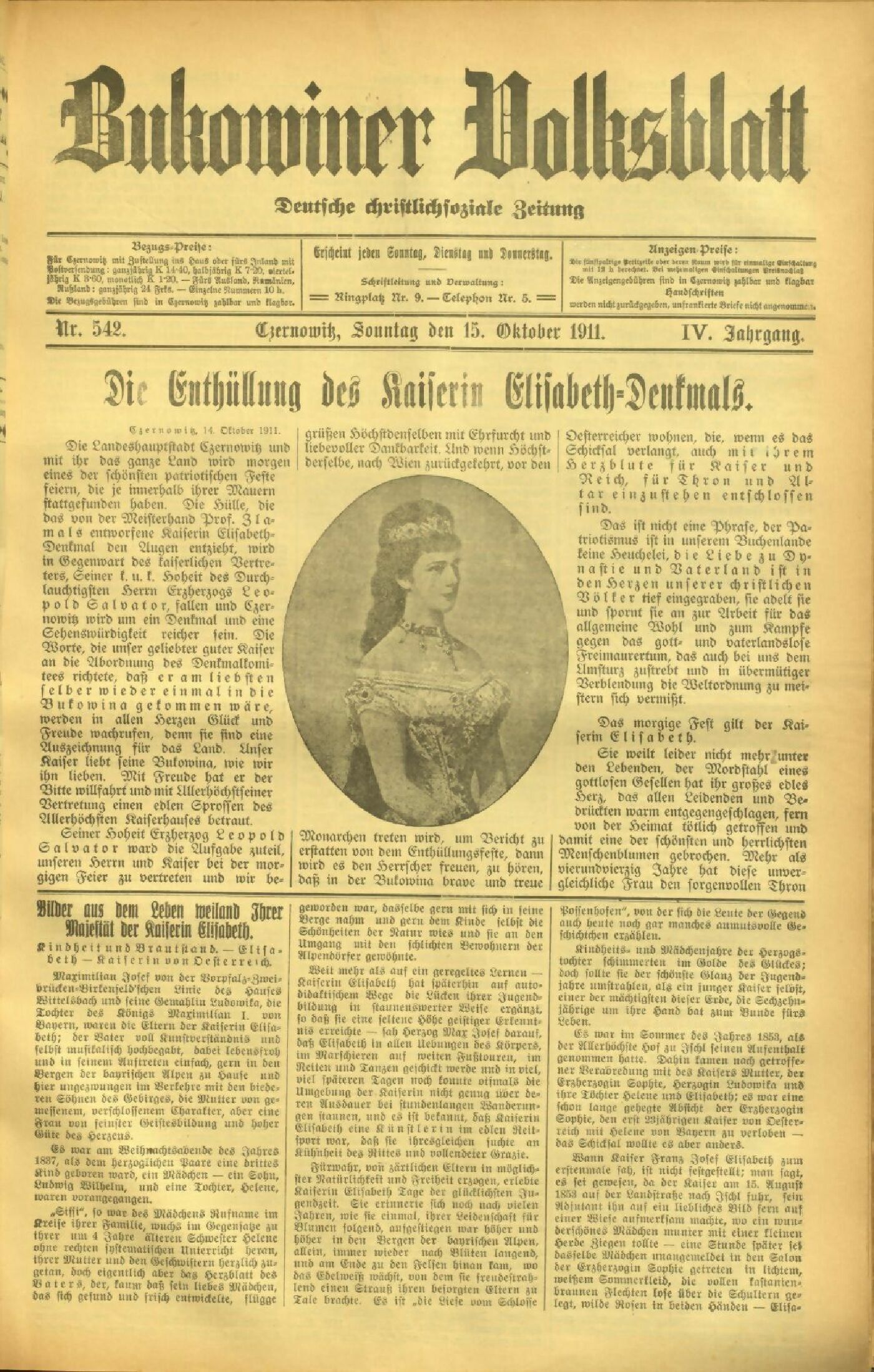
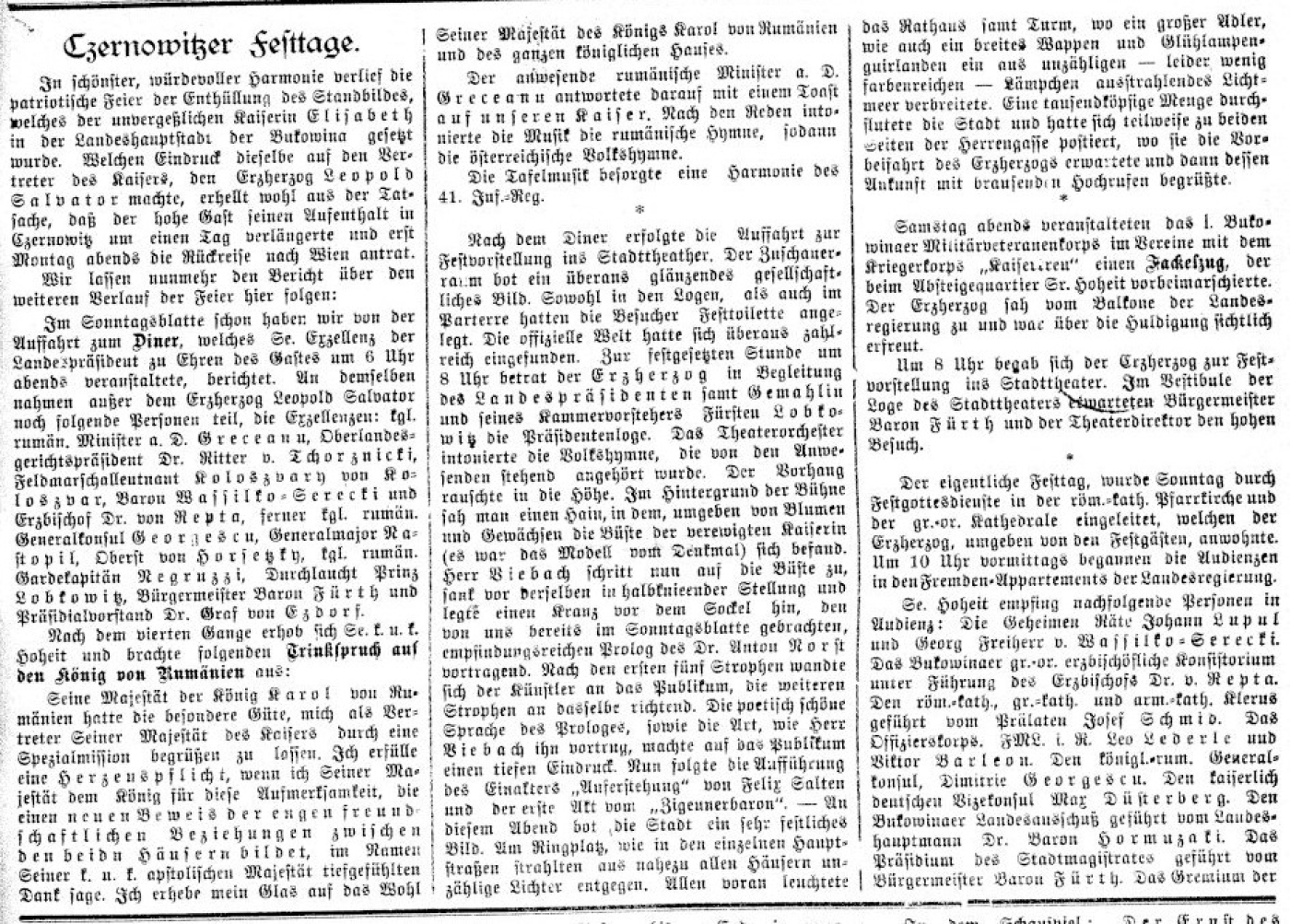
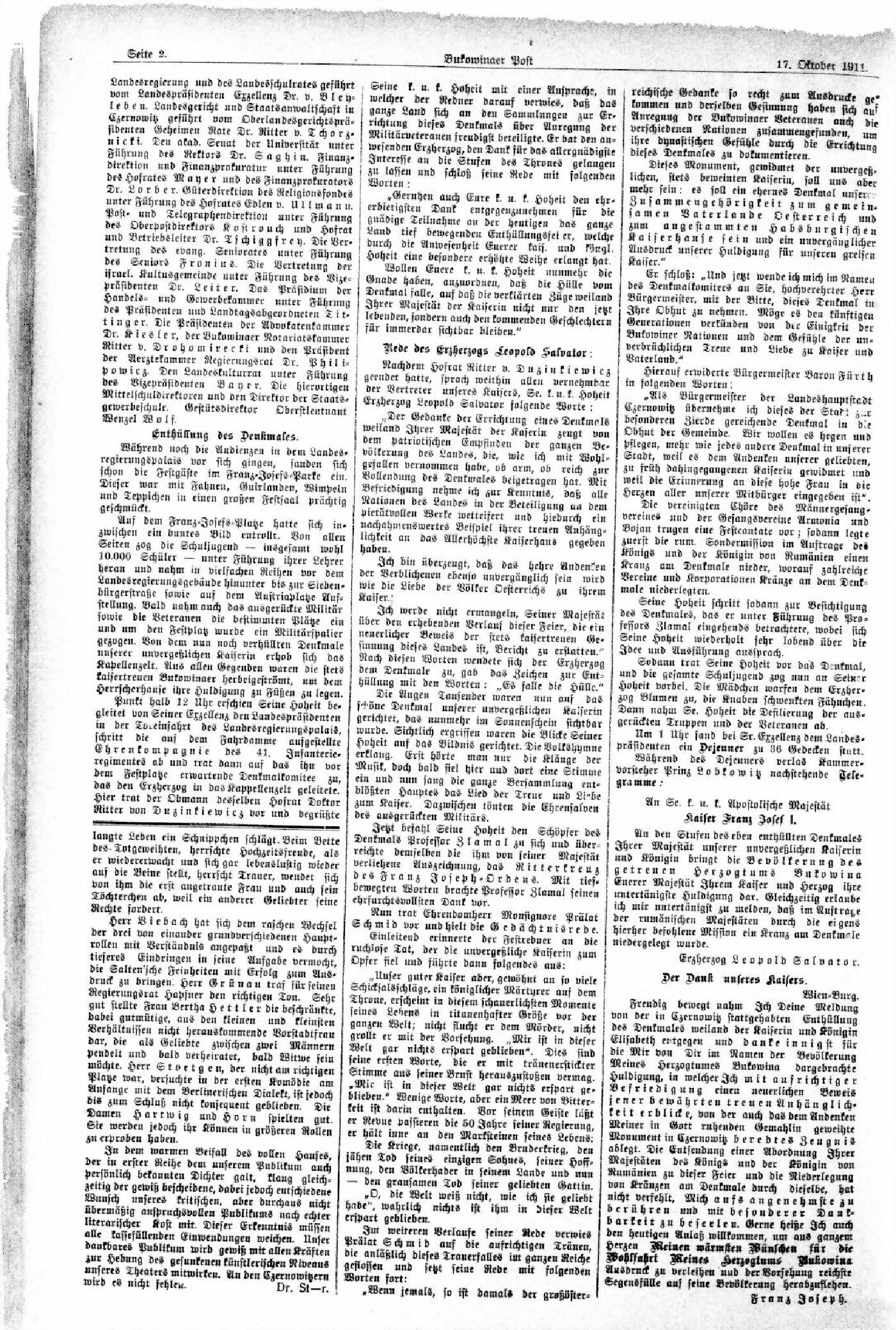
The monument was unveiled on 15 October 1911 in the presence of Archduke Leopold Salvator, a member of the imperial family, an envoy of the Romanian king, and all the dignitaries of the Crown Lands, in a ceremony that lasted two days. The monument was celebrated in the press as an expression of the deep 'patriotic feeling' of the people of Bukovina (Bukovinaer Post, 15 October 1911, p. 1). The ceremony in the park was attended by military and veterans' associations as well as 10,000 schoolchildren, who 'lined up in several rows in front of the provincial government building all the way to Siebenbürgerstraße and Austriaplatz' (Bukowinaer Post, 17 October 1911, p. 2).
On the design of the monument. The Empress was conceived as the ideal figure of a nature lover, sitting on a rock in a secluded park. She gazes contemplatively at the landscape, holding a book in her right hand. Her favourite flowers, carnations and wildflowers, rest on it and on her lap. In her other hand she is holding a fan, with which she is leaning lightly on the seat. The pedestal, made of Silesian granite, depicts stacked stones with the inscription Elisabeth imperatrix Austriae. The figure itself is cast in bronze and stands 2 metres tall, i.e. 1.5 times life-size. The clothes are modelled on the empress's original pattern; the empress is seated in a promenade cloak that wraps the figure in picturesque folds" (Bukovinaer Post, 15 October 1911, p.3).
After the annexation of Bukovina by Romania in 1918-19, the monument was removed. Mayer Ebner, Zionist and editor of the Ostjüdische Zeitung (Chernivtsi), wrote in 1924, after his stay in the Romanian Herkulesbad (Rum. Băile Herculan), where there was still a monument to Empress Elisabeth: 'The Romanians in this country were more chivalrous towards their former, so unfortunate Empress than the Romanians in Bukovina, who have removed the monument to the Empress' (Ostjüdische Zeitung, 26 August 1924, p. 1).
Text: Markus Winkler