The Bukovina Germans: Inventions, Experiences and Narratives of a Community
About the research project
The so-called Bukovina Germans – like other German-speaking settler groups in other parts of Eastern Central and South-Eastern Europe – did not for a long time regard themselves as a separate and distinct group. It was not until the interwar period that, under pressure from Romanianisation and against a backdrop of general ethnic-nationalist agitation, the common bonds between the German settler groups were emphasised more strongly. The term ‘Bukovina Germans’ also only became established towards the end of the 1920s: in the 1910s and 1920s, the phrase ‘Germanness in Bukovina’ or ‘Bukovinian Germanness’ appears repeatedly. To put it bluntly, it was only under the continued influence of Nazi rhetoric on ethnic groups and, above all, through the experiences of resettlement and loss of homeland that many Bukovina Germans came to a lasting sense of identity as Bukovina Germans.[1]
This thesis lies at the heart of the project "Bukovina Germans: Inventions, Experiences and Narratives of a Community". Generously funded by the Federal Government Commissioner for Culture and the Media (BKM), it comprises two components:
- Firstly, the publication of a volume in the series Danubiana Carpathica. Yearbook for History and Culture in the German Settlement Areas of South-Eastern Europe (edited by Maren Röger and Alexander Weidle)
- Secondly, an interview project with Bukovina Germans and their descendants (project led by Alexander Weidle)
[1] Paragraph containing further references reproduced in Maren Röger, Gaëlle Fisher: Bukovina. In: Online Encyclopaedia on the Culture and History of Germans in Eastern Europe, 2017. URL: http://ome-lexikon.uni-oldenburg.de/p32554 (as at 07/06/2017), last accessed on 17/12/2018.

Interview Project (project management Alexander Weidle)
The intergenerational interview project aims to explore, from various angles, how the community of Bukovina Germans was formed, experienced and recounted today. By April 2021, around 140 interviews had been conducted in Germany, Austria and Romania, in which interviewees were able to recount their lives in Bukovina, their resettlement, relocation and flight, as well as the course of their later lives. Given the increasing mortality of the generation that lived through these events, this represents an incredible and, in many cases, final opportunity to preserve these accounts for posterity. At the same time, the intergenerational project is also aimed at the descendants and spouses of so-called Bukovina Germans. What seems particularly promising is that the respondents come from diverse backgrounds: their life stories show that ethnic identity was by no means as clear-cut as it was proclaimed to be in the wake of the nationalist and, later, racist rhetoric. At the same time, the narratives paint a complex picture of resettlement, settlement and integration processes into the later Federal Republic, the GDR or Austria. Alongside those who (or whose ancestors) were involved in German resettler associations or were never represented there, the project also includes French-speaking interviewees of German and Jewish backgrounds, as well as recognised and unrecognised ethnic German repatriates who describe themselves or their families as Romanian rather than German.
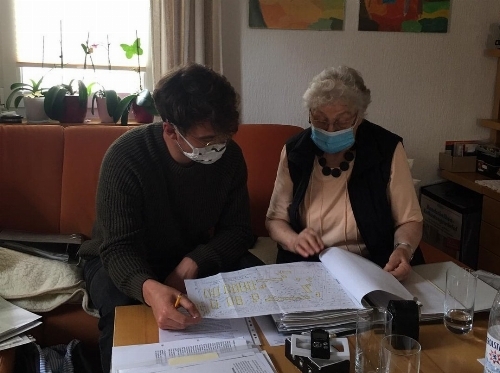
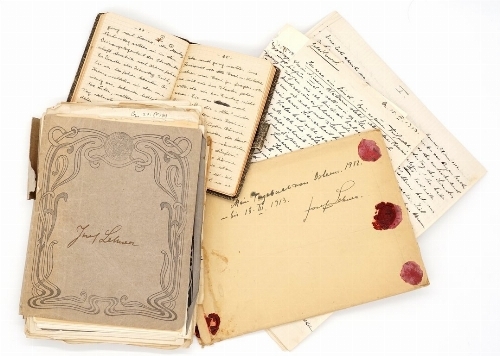
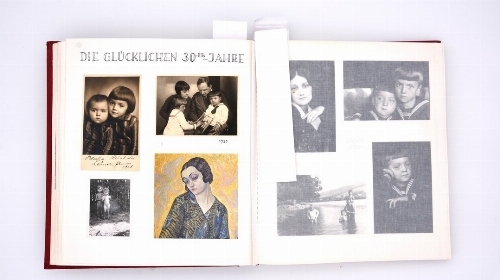
The urgency of carrying out this project is evident not only in the preservation of memories, but also in another key aspect: in conjunction with the interviews, the Bukovina Institute at the University of Augsburg, through its archive, offers the opportunity to hand over cultural artefacts, official documents, letters, photographs, memoirs or other sources for safekeeping or as a donation. This is particularly significant at present: over the past few months, it has become apparent on numerous occasions that descendants show no interest in the history of Bukovina, and dozens of unique sources have already been disposed of following the death of parents or grandparents.
Practical approach and outlook
The interviews are recorded with dual backups and follow the three-part procedure commonly used in oral history: the first part, which is not interrupted by questions, allows the interviewees to recount their life stories. This approach aims to capture a coherent narrative. In the second part, follow-up questions are asked regarding the life story, before the third part is guided by a comprehensive questionnaire or set of guidelines.
In a further step, photographs and physical artefacts will be included. Their descriptions will also be recorded; the sources will be photographed or scanned. Both audio recordings and photographs will be stored in the Bukovina Institute’s archive and extensively processed: this will result in memory logs, keyword indexes and full transcripts.
Once the project is complete, the interviews conducted, together with further conversations held in the Institute’s extensive collection, will be made available in an interview archive at the Bukowina Institute.
Outlook
Based on the collection of interviews and the numerous sources from private households, a doctoral project is currently being developed at the University of Augsburg and the Bukowina Institute. It is being carried out by Alexander Weidle and bears the (working) title “Institutionalisierte Erinnerung und ihre Grenzen: Landsmannschaft und Lebensgeschichten der Buchenlanddeutschen”.

Ansprechpartnerin
Funded by:





Bukowina-Institut
An der Universität Augsburg
86159 Augsburg
Opening hours
8:30-16:00 Uhr
Auch nach Ablauf der Projektförderung freuen wir uns über weitere Gesprächsparter*innen.